

cross-posted from: https://lemmy.world/post/50434194
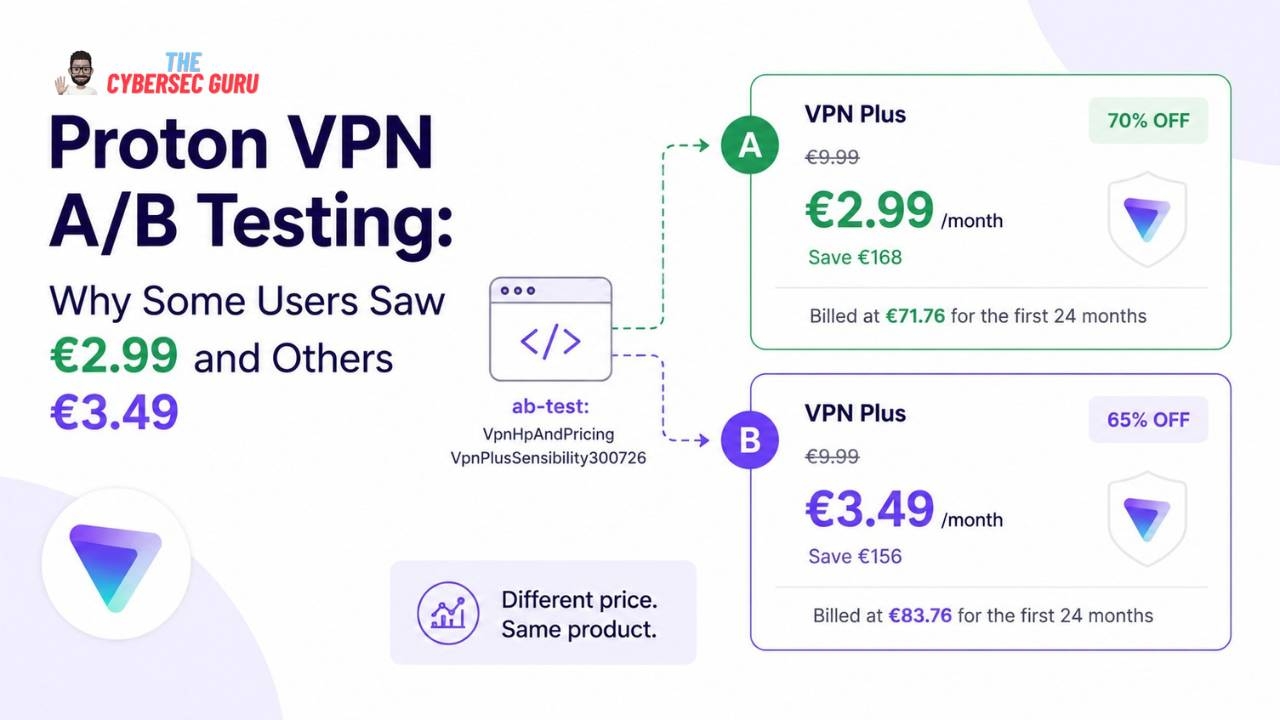
Proton VPN’s pricing page exposed an ab-test identifier linked to two VPN Plus prices: €2.99/month (70% off) and €3.49/month (65% off). Repeated testing produced B → A → B → A → B, with the variant matching the rendered price each time. €12 difference over 24 months.
Yet again Lemmy shows that much of the userbase is young and has little general knowledge. A/B testing is quite standard, and there is nothing shady about testing different prices to see what consumers will purchase more.
A couple of times I’ve been walking in a mall (dating this anecdote back a couple of decades or so. heh) and got asked to participate in product testing where I was shown - in the case I remember better - two cans of soda with different designs. Strawberry soda - one pink can, one red can - which one I was more likely to purchase.
A/B testing is quite common as companies figure out how to sell you more. Assuming it’s randomized, it’s completely ethical.
I mean I agree that AB testing is normal, and not really anything to start clutching your pearls about.
But this is a pretty patronising statement, mate.
edit: too long of a reply, nobody cares as much as I wrote. Thank you for feedback. I humbly disagree, but appreciated anyway.
Key difference here.
Do you normally participate in how companies set their pricing? No.
Do companies update their pricing? All the time.
All you don’t like is random people paying different prices. It’s not unethical, it is normal business practice, whether you are ignorant of it or not.
Something being normal business practice doesn’t make it ethical.
Ethical would be for them to look at all their Capex. Opex and charge a healthy 20% profit on top. And if they can’t survive. Fold shop and do something else. A/B testing randomised or not, simply sees customers to be squeezed.
Who gets to decide the exact profit margin all companies must stick to?